
The Storefriendly Singapore Saga: Jes Johansen’s Long Journey to Success
Jes Johansen’s Viking forbears haven’t traveled anything near the distance this modern day conqueror has covered in building up an extraordinary career over four continents. It has all lent to the success of Storefriendly Singapore and what comes next for this successful self storage enterprise.
Danes may have given up their pillaging, take-no-prisoners Viking ways for a widely admired, gentler social democracy. But for some, that thirst for adventure and far-flung places can still be seen in the glint of a sharp-eyed smile, the hunting wolf's grin that tells you the man isn’t totally tame. Not by a longbow shot.
Jes Johansen has traveled farther than his forbears, albeit in more comfort at 37,000 feet high rather than in the belly of a Viking longboat. From roaming the antipodean deserts to braving machine-gun toting thugs in Africa, his exploits range the world - but now continue in the eminently civilised city-state of Singapore.
There he is the successful CEO and founder of Storefriendly Singapore, a locally focused and globally funded self storage powerhouse. Like the Vikings, his focus, use of technology and competitive spirit have seen him leave his mark on newly settled land.
Buy a paintin’ mate?
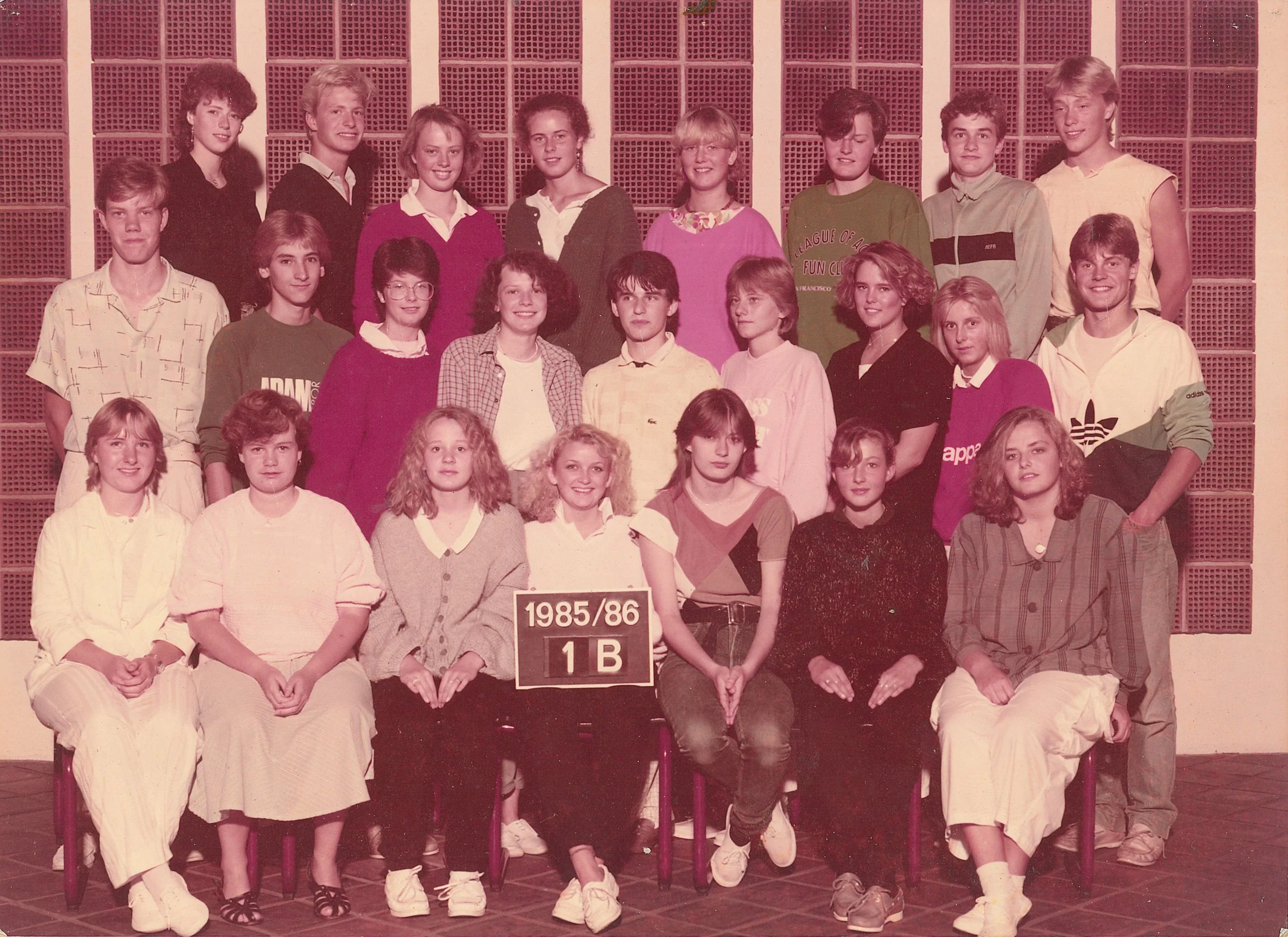
Bordering on penniless, over 16,000km from home, a 20-year old took a chance, sight unseen, on a fantastical, but surprisingly legitimate business: selling paintings door-to-door in suburban Australia. Imagine the bemused Aussies in small opal mining towns opening their doors to a young…what is that accent??...Europeanish? Asking if they wanted to buy a painting.
Young Mr Johansen and colleagues would pick up rolled painting canvases shipped to them at local post offices (starting in Wagga Wagga), and then mount them on cardboard themselves before heading out in a beat-up car (a thirsty Ford Fairlane V8) they procured to try and sell to (theoretically) art-poor, cash-rich Aussies.
At first, disaster: no sales.
But Mr Johansen and friends listened carefully to what they heard from the prospects and did research with local municipal land records officials (not successful) and realtors (better) to refine their target neighbourhoods.
It was an exercise in finding recently built residential areas where residents had moved in, but had only taken care of the basics. High priority issues such as having the lawn laid out, getting air-conditioning installed or the kitchen fitted out all needed to be done first. Only after having done that were they ready to start thinking about beautifying their homes. Mr. Johansen and his team determined they needed to find the sweet spot: settled, but not too settled.
And find the spot they did. Finally, people said “Oi, mate, I’ll take one.” And the sales came.
This was his first lesson in everything business from researching customers for market intelligence to listening to customers and iterating to adapt the product mix and target geography; the language to close the deal and persisting in the face of failure. It was also a lesson in risk management and looking out for your mates; going door-to-door as a stranger in a strange land was risky for man and woman alike, so the four partners established protocols to look out for each other and keep in contact.
Another lesson was that loose partnerships to start were fine, but when the money started rolling in, disagreements began and the starting foursome disbanded. But that’s fine. It was business pre-school; the MBA was far off down the road.
Returning to Denmark with a partial university degree, he was still restless. He applied to get into the Maersk training programme, considered the gold standard in global trade and shipping (equivalent to a university degree). After multiple rounds of interviews…he wasn’t accepted. Everyone in Denmark wanted into this programme; it was not a given. But it irked him to be denied. He applied again a year later and wiser and, without any more process, they took him on. It turned out they just thought he needed a year to mature; if he hadn’t applied again, this elite programme would have slipped through his grasp. His stubbornness paid off.

The company shipped him to Poland during the go-go years as the Eastern Bloc threw off the shackles of Soviet oppression and the economy roared to life. Conservative budgets were blown out of the water as the Polish people found their entrepreneurial and trading verve and ports were packed. As Mr Johansen put it, “But it just took off. The growth was just ridiculous. And that was fun.”
There was no chance of him getting too settled as the firm then sent him off to Conakry, capital of francophone Guinea, protruding into the Atlantic Ocean just north of the equator (“frankly, they don't ask you, they just say, ‘you're going there’”). It was one of the roughest of rough pearls on a chain of shipping stops on the East Coast of Africa. A gratuity a day to brigands pushing an automatic weapon in your face at informal street ‘toll booths’ was the norm.
A big fish - #2 in command - in a small pond, every day needed a constant push to make anything happen. But at least he could see the fruits of his efforts daily, the action-reaction connection clear in deals closed and ships safely loaded and on their way. If he didn’t push, everything stopped. It was the nature of the place; but he made it work. Inaction was never an option.
His supervisor announced, in time, that he was going to do an MBA. A what? Young Mr Johansen had never heard of such a thing - he was still only 25. But he didn’t have time to think about it then - Singapore was calling.
The Merlion Shock
Rather, the siren call of the Merlion state was heard by his Copenhagen masters who decided to send him east. He landed in Singapore and was in for, in his words, “a reverse culture shock”. Everything was working; it was the first time at work he could see a machine that would work with or without him. He was getting an education on global economics by seeing world trade from a truly transnational transit hub and that was exciting, but…
But he missed being the one who made the change happen. Sure, he was good at his job by now - trained by the best. But he had a question in his mind: “How do I make a difference?”
He didn’t know the answer, but he had an idea of what it would take. His boss in Guinea had piqued his interest and by now he had the idea that a theoretical framework for his experience on four continents could take him to the next level. Armed with a couple of years of university and his Maersk training, he secured a spot at IMD, the renowned Swiss MBA programme and still, in his opinion, the best in the world.
Inflection Point
An intense year of learning, friendmaking and sharpening his interview skills catapulted Mr Johansen into his first ‘boss’ role, It was also his first exposure to a storage business - not yet the storage business. The role he landed demanded interviews in Milan, London and finally Atlanta before he brought it home. A serious marker in time: Flying down the east coast of America en route to Atlanta, he could see the smoke still rising from the rubble of the World Exchange Center Twin Towers in New York, weeks after they fell.
From his pre-MBA role doing sales in Singapore, he was put in charge of a British branch of an American document storage company, 230 persons strong. Later, he stepped up to head of ops for Europe (600+ pax). Targets were met, but multiple restructurings and moving towards a messy matrix structure just wasn’t working, and for the first time, he was asked to leave a company.
It’s easier to talk about the tough times when they’re past, but at the time, it was gut-wrenching. But, he didn’t succeed at his first attempt at the Maersk programme. He’d taken knocks before and knew how to get up and keep fighting.
Along the way, he met a girl, who turned out to be THE woman (and current Mrs Johansen). Asia beckoned again and he returned to Asia to work with a Swiss pharmaceutical company out of their Singapore office. The ultra-conservative approach didn’t match his ‘make a difference’, go-getter attitude and he left after a year. He had THE woman - now he needed to find THE industry.
When everyone is talking about you…
A chance encounter saw him meet Brian Perry, one the OG’s of self storage in many countries across Asia and veteran of Steel Storage and later, Janus Steel Storage (post-acquisition). Mr Perry, with an eye to retirement, thought Mr Johansen was perfect for the Steel Storage business. He said so to his partner, founding Self Storage Association Asia (SSAA) Chairman, Jon Perrins.
Mr Perrins was a little taken aback. He’s just heard about this hungry young Dane from one of Mr Johansen’s colleagues from the IMD programme, an investment banker, who was helping Mr Perrins raise money to found what would become Extra Space Asia. Everywhere Jon Perrins turned, there was Jes Johansen.
An orderly transition to Mr Perry’s retirement saw Mr Johansen join Steel Storage Asia. He was on his way to take the reins as Managing Director.
For five years, he was overseeing the supply to key players like their nascent sister company, Extra Space (led by another SSSA founding Board member, Michael Hagbeck), Quraz in Japan, Lock & Store in Singapore (then owned by Singaporean REIT Maple Tree) and Angus Miller’s Big Orange.
Storefriendly Singapore V 1.0: BFFs from the start
But he could see where opportunity lay and wanted in on the self storage business directly. He had a novel idea for how to build out quickly. Rather than raise the huge capital required for whole buildings, he thought “7-11” style, not supermarket style. Smaller with more locations meant he could be closer to more customers and fill up sites faster. He didn’t already have a giant bag of cash, so he thought “franchising!” The king of Asian franchising at the time was Kevin Chan, Chairman and founder of Storefriendly in Hong Kong.
Day 1: Call Hong Kong. Day 2: Fly to Hong Kong. Meet Kevin for 20 minutes. Agree to work together. Easy, right?
Not really. Pressed, Mr Johansen admits that this was the toughest single decision he has made in his life. Married with two very young children, he sat down with his wife and explained his best laid plans (putting all his IMD training to use) that involved sinking their entire savings into the new business. It could go all wrong.
Mr Johansen, says, “And she said, “You know what? A guy like you really should be working for himself. So if you think it's the right thing, and you've done all your homework, and you think that this is good, then I'm all for it.””
And that was it. Game on.
The details did take some working out. Mr Chan was happy to bring expertise, process, technology (including the self-designed storage management system) and branding, but no direct investment to start. The new venture would have to stand on its own. The now not-so-young Dane thought that was reasonable. But the branding? He wanted his own. Not “Johansen Storage”, but something different from Storefriendly. While Storefriendly’s brand was perfect for Hong Kong, Jes knew Singapore had a different vibe.
They compromised on using the Storefriendly overarching brand (logo and colours) but allowed for a different marketing approach more appropriate for each city. Hong Kong’s hyperkinetic, edgy marketing wouldn’t fly in given Singapore’s more toned down sensibility.
The franchising effort was tough though. Self storage circa 2011 was still quite a new thing in Singapore. Literally hundreds of leads were procured from aspiring entrepreneurs, but without a proven Singapore site for the brand, closing was hard. The only thing to do was to open a proof-of-concept Storefriendly Singapore.
In the beginning, it was just Mr Johansen plus one. He would answer customer enquiries at all hours in his mobile with a chirpy “Storefriendly, Hello!” His children in the backseat thought that was the full name of the company: Storefriendly Hello! And would call it out when they passed one on the highway. “Look! It’s Storefriendly Hello!.”
Mr Chan did put money in, as did, of course, Mr Johansen. For Mr Johansen, it was all his savings. Bukit Batok was the site and once the first site opened, the franchisees followed; three in three months. And that was just the beginning.
In three years of successfully building, marketing and filling sites in partnership with local entrepreneurs, they had twelve sites, most franchised. Then Ms Ng came knocking.
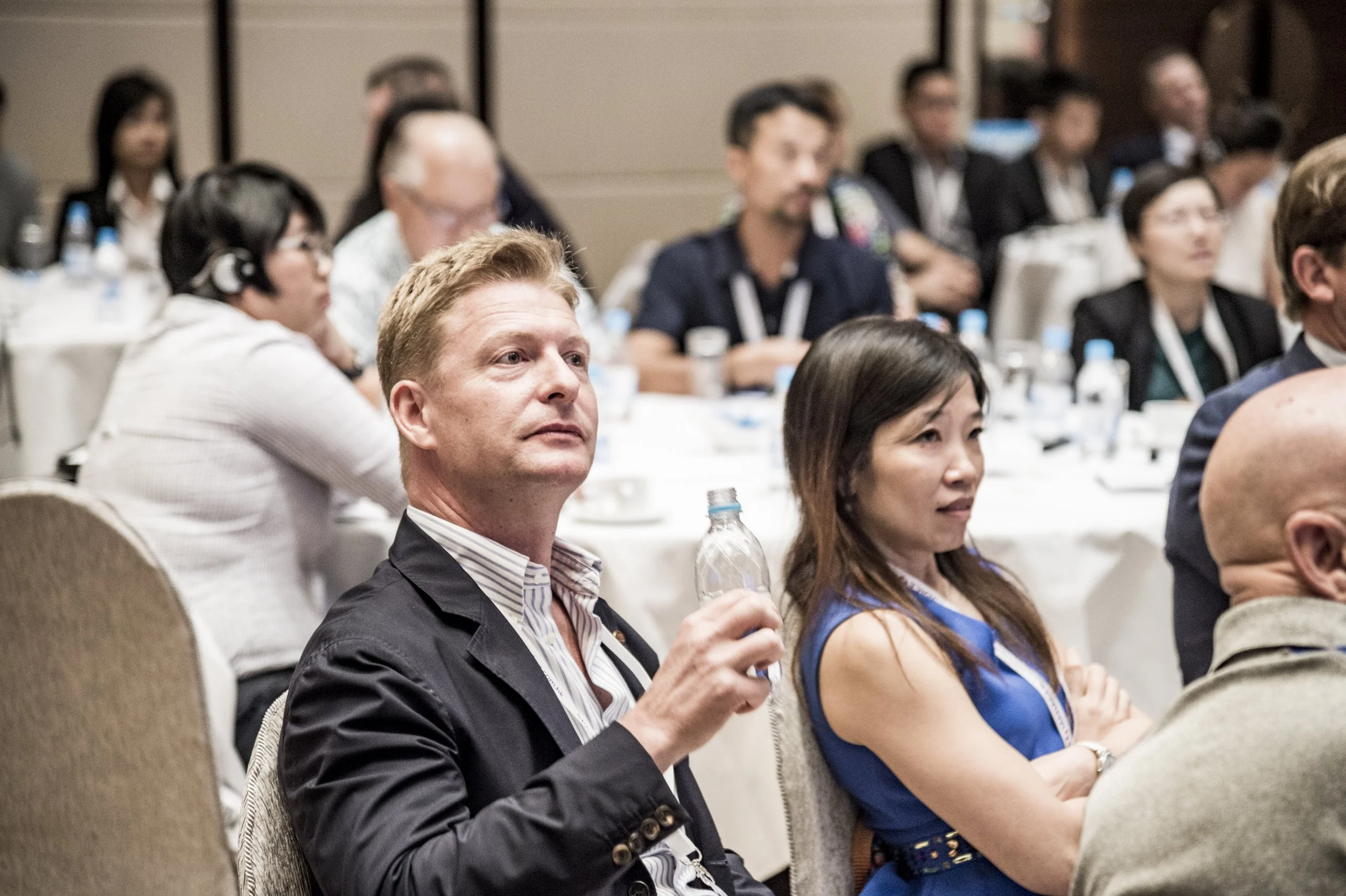
Mr. Jes Johansen and Ms Helen Ng at Self Storage Expo Asia 2017.
This way to the exit
General Storage (backed by SingPost) had a mandate to grow their Lock+Store Business in Hong Kong and the CEO, Helen Ng (current Chair of the SSAA), saw an opportunity in Storefriendly.
There was an element of the dance back and forth as Mr Johansen thought a deal couldn’t be done as eight of the 12 locations were franchisees. Finally, Ms Ng made him an offer he couldn’t refuse - but he couldn’t accept either. He needed to simultaneously conduct nine negotiations; one with General Storage and another eight with the franchisees!
Much of the negotiations happened in Tokyo at the Self Storage Expo Asia 2015. The two CEOs would steal away with their teams to hash out details. The high stakes negotiations came to fruition and culminated with Mr Johansen and Ms Ng getting the job done. The SSAA was a new organisation then; Mr Johansen was a founding Board member. But already the SSAA was the catalyst where the action happened.
General Storage dramatically expanded their portfolio and the franchisees and Mr Johansen had exited. But that meant, after about a year of transition (with bonuses for new openings), he was once again unemployed.
He admits that while starting the business may have been his toughest decision, letting go was very emotional.
“When you sell the business. I mean, that is, that was more emotional than I thought it would be.
Handing it over and saying goodbye…Now it's somebody else's…The blood, sweat, and tears of those previous years, go like, boom, hand it over.. when you're an entrepreneur and you've really started from, you know, from the ground up, then it was a bit more emotional than I expected it to be.”
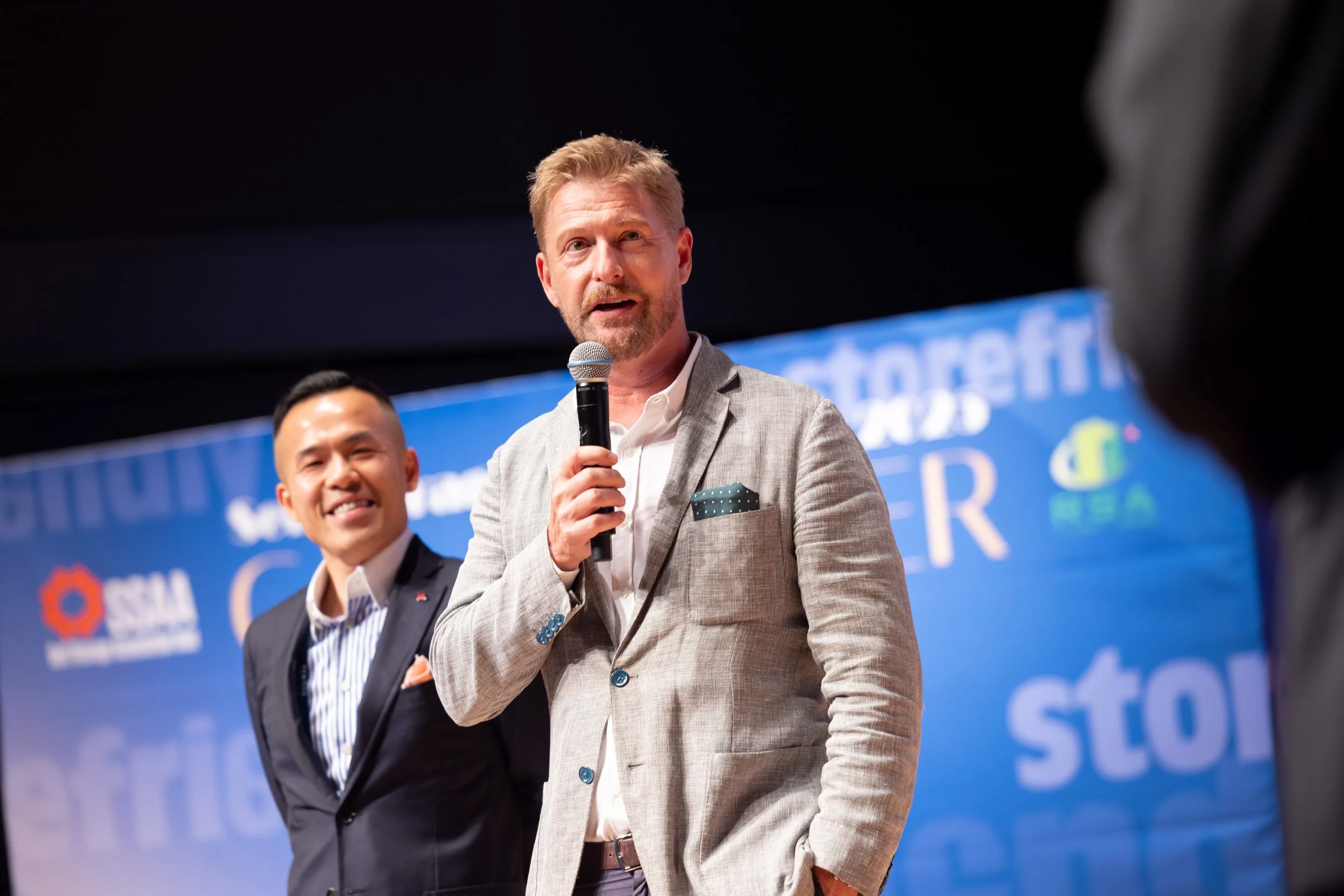
Mr. Kevin Chan and Mr. Johansen at Self Storage Expo Asia 2025 Tokyo.
Storefriendly V 2.0
Mr Johansen returned to one of his old loves, Australia, and started a small accelerator, helping startups to scale up and professionalise. And while they did get six companies going, like a Viking to the sea, the call of self storage was too hard to resist.
Working with Kevin Chan again was a no-brainer.
“Kevin and I always say that one and one has got to be more than two, and sometimes it's even eleven.
So if you can really bring something new that you couldn't do alone, then do it, right? It does take a load off a lot, because it's lonely. It's a risky, risky thing to go out and start a new business. Even in an industry you think you know, it is risky. And sometimes very, very lonely.
And that's why I did it. And I would do it again.”
Re-acquiring the rights to the Storefriendly brand in Singapore from General Storage wasn’t difficult; their brand Lock+Store was (and is) going strong.
He and Mr Chan had learned some lessons along the way and were changing how they did business. The franchising model was good for scaling up and expanding rapidly on a budget, but it wasn’t good for capturing value. You had to own the customer relationship to capture value.
The “7-11” model had served its purpose at its time. But the new way forward demanded a much bigger pool of capital to buy en bloc buildings. By this time, the Storefriendly brand in Hong Kong and Singapore (and Macao and Taiwan) had a solid track record of success to be able to attract and credibly negotiate with serious institutional investors. Messrs Johansen and Chen then teamed up with Arthur Law, Managing Principal and Co-Founder of Storefriendly Asia and his investment vehicle, Ace & Company. Arthur joined their partnership to professionalise the relaunch of the business and grab the attention of institutional investors.
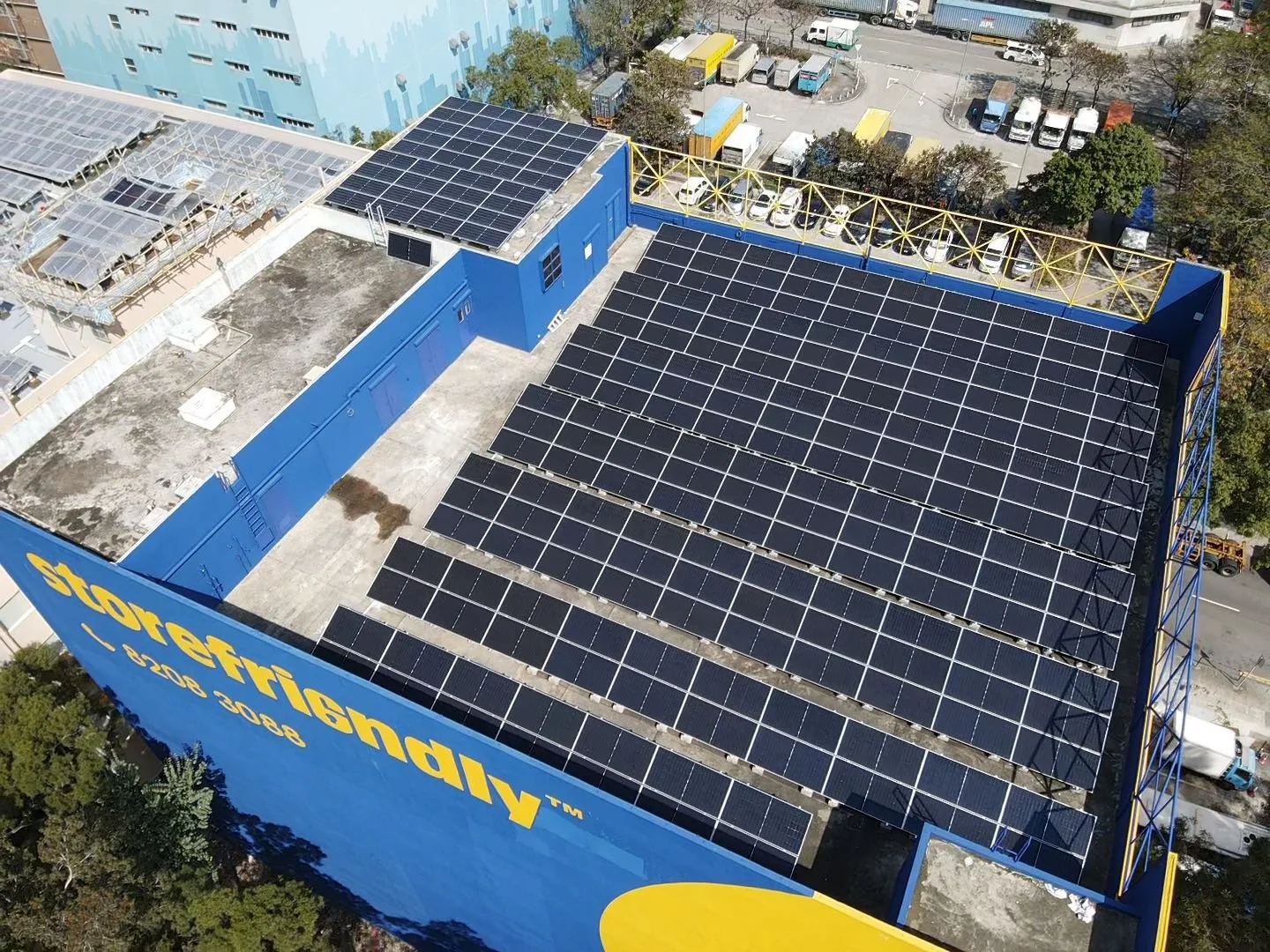
The first acquisition was the current Storefriendly Singapore headquarters at Paya Labar in 2019. Storefriendly was back in business in Singapore!
Partners Group joined the party in 2021 to provide the capital needed for major acquisitions in Singapore under the now well-established propco-opco model used by firms across the region. Executing on the growth plans saw the Singapore footprint grow to its current seven locations comprising 600,000sq ft in modern facilities.
One of the most modern elements includes StorefriendlyGo, robot-enabled self storage where large cabinets are whisked to and from customers by ‘Gary the GObot’. While the tech can be expensive, it improves efficiency by up to 30% and keeps goods in a ‘no-go zone’ where neither staff nor other customers can access, taking security up another notch.
Facial recognition at the building point of entry, solar panels for self-generated green power and other cutting edge technologies were part of the launch and new elements are being adopted as they come on line and provide a better customer experience and realise more efficient operations.

The future of Storefriendly Singapore
While money may be fungible, capital isn’t, not really. Capital comes with a target risk-return profile that is different for every investor. The investor keen to take on the higher risk of an empty warehouse waiting to be converted into self storage and then filled over time is different from an investor who would invest at an established business humming along with all the customers, tech and construction in place.
Since 2019, Storefriendly Singapore 2.0 has developed with the three partners, Messrs Chan, Law and Johansen, working together on a platform with cross-holdings in the various holding companies that make up any multi-national, mutli-site self storage operation. The relative ease of their first Singapore experience, including an amicable exit, has encouraged them to continue to collaborate. Storefriendly Singapore 3.0 is moving into the next phase of its evolution. Its capital needs are maturing accordingly. New partners will be part of the next phase.
Mr Johansen identifies some elements that need to be in place to capitalise on opportunity. A deep understanding of the intricacies of local real estate markets, including government policy and local regulations, is an imperative. Anyone considering Singapore needs to understand JTC’s direction (the body controlling most of Singapore’s industrial property); in Thailand, land ownership rules. Every market has its unique characteristics.
He also identifies a chicken-and-egg problem that is solved by establishing an investment platform. If you start fund-raising once you’ve identified a great real estate opportunity in the market, it’s too late. By the time you raise the money, the moment will have passed. So establishing the trust to have the capital ready and waiting when the right opportunity comes available is key.
Looking back, Mr Johansen observes it would have been ideal to bring on big investors for Storefriendly Singapore’s first round of buildout. But without the track record, he couldn’t have closed the big deals. Likewise, the lessons he learned selling paintings in Australia, negotiating the complexities of Polish and Guinean dockyards and even the lessons at IMD were all necessary steps to move on to the next stage of the Johansen saga.The character, the experience, the track record and the industry-wide trust had to be built one step at a time. He won’t do it alone, confident with the supportive Mrs Johansen and partners Kevin Chan and Arthur Law in his corner.
Like a Viking financing his next voyage on a new adventure, Jes Johansen has his crack team ready, his boat in the water and provisions laid in. Storefriendly Singapore Version 1.0 was a smashing success. Version 2.0 is going strong. Version 3.0 will conquer exciting new shores.